Clinicians are tired. Burnout is high, note queues pile up after dinner, and summer schedules with vacation and staffing gaps only make the pile feel taller. At the same time, documentation rules are getting tighter, not looser. Leaders are being asked to protect time off, keep quality high, and still get every box checked in the EHR.
That is why many organizations are comparing automated medical transcription, AI scribes, and mixed models. Each option affects three big things: how accurate the note is, how fast it is ready, and how much legal and compliance risk your group is comfortable holding. In this guide, we share a simple way to match each model to specialty, visit type, and risk level so you can build a smart mix instead of chasing one magic tool.
Defining Your Documentation Options
First, we should get clear on what we mean by each option.
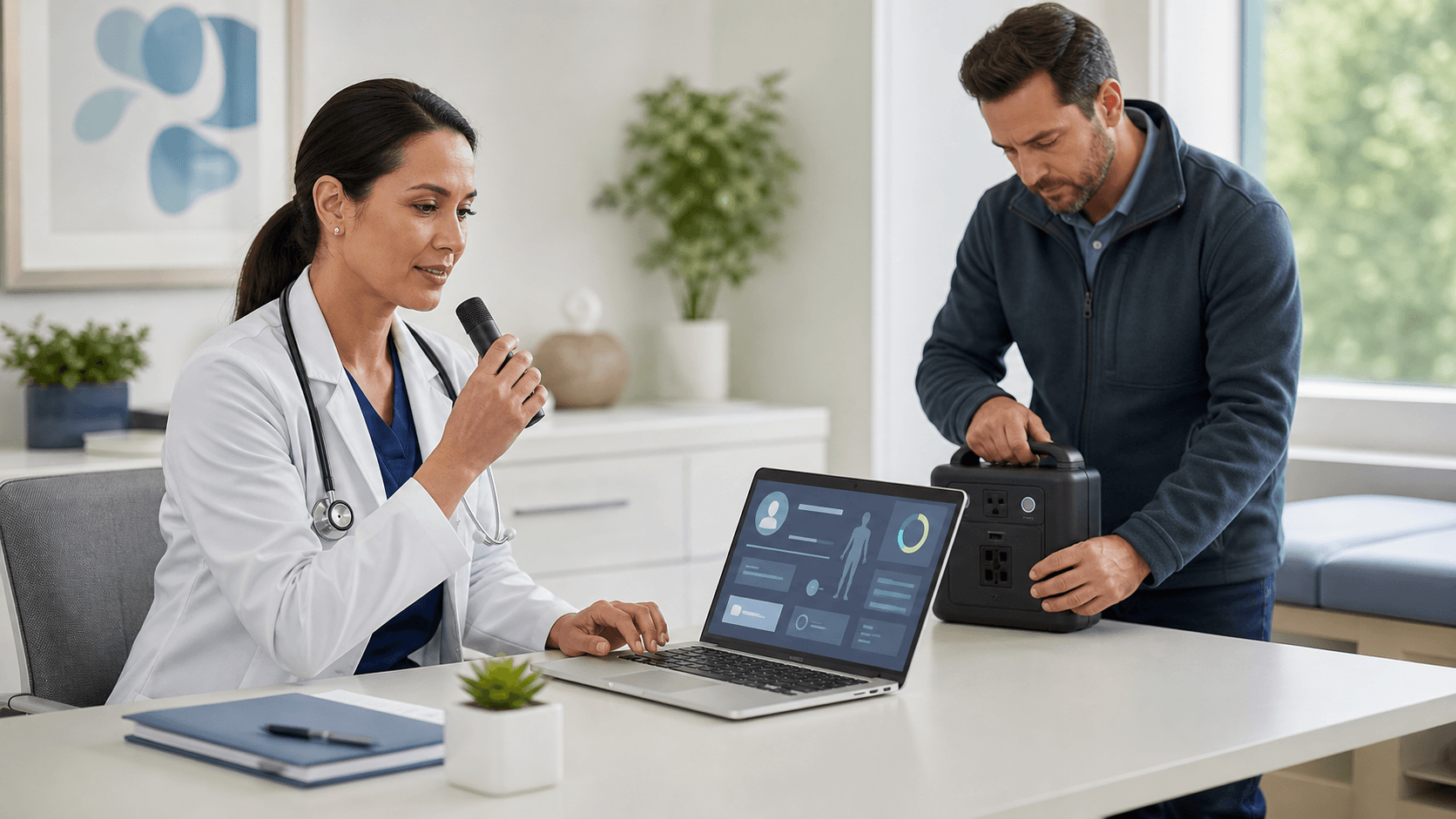
Automated medical transcription is what many clinicians already know. The clinician speaks, usually using structured templates or voice commands, and cloud speech recognition turns that speech into text in near real time. Tools powered by platforms like Dragon Medical One sit in this category.
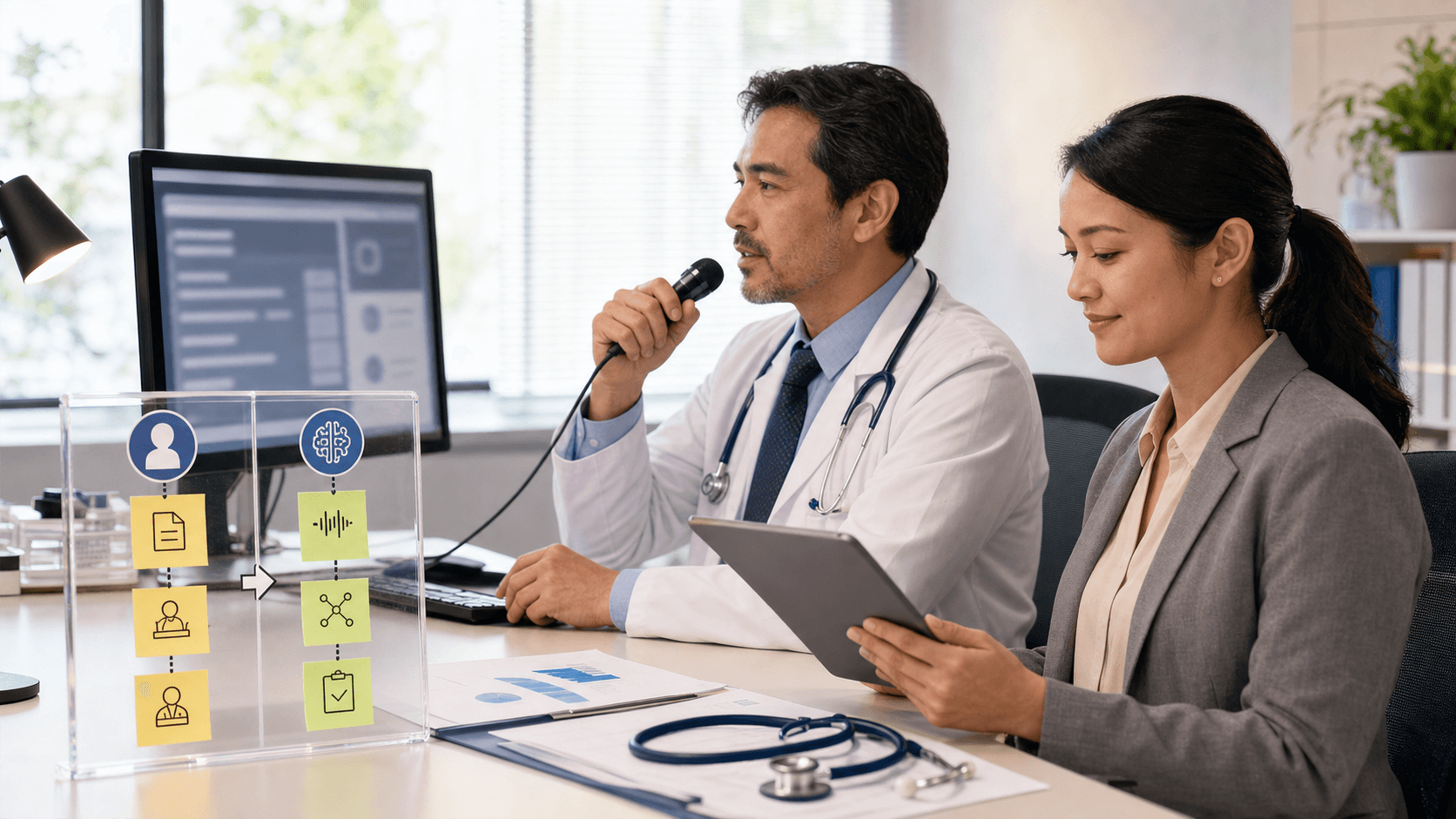
AI scribes listen in the background during the visit. They capture both the clinician and the patient, then generate a draft note with sections like HPI, exam, assessment, and plan. Some offer suggested diagnosis and billing language based on the conversation.
Hybrid models mix the two, for example:
- AI output plus human quality review for high risk visits
- AI scribe for narrative parts, with classic dictation for assessment and plan
- Clinician dictation for key phrases or problem lists, with AI helping to expand or summarize
The trade-offs are simple to say, but important to weigh:
- Dictation gives control and structure, AI scribes give automation and narrative richness
- Speech recognition is usually near instant, AI scribes often take longer to process, especially with long or noisy encounters
- All models must respect HIPAA, integrate with the EHR, and fit within your Dragon Medical One ecosystem if you are standardizing there
Most groups will not pick only one. The real win comes from matching these tools to how different parts of your organization actually practice.
Matching Technology to Specialty and Scenario
Primary care and pediatrics see high volume and a wide mix of complaints. There is a lot of counseling, preventive care, and shared decision making.
For these teams:
- AI scribes work well for long, education-heavy visits like new-patient intakes or complex care planning
- Automated medical transcription shines for quick follow-ups, medication refills, and focused problem visits
- Many clinicians prefer to dictate a tight assessment and plan even when using an AI scribe for the rest
Surgical and procedural specialties tend to live in templates. Operative notes, procedure reports, and post-op checks often follow a clear pattern with heavy use of macros or voice commands.
Here, automated medical transcription is usually the easiest fit. Surgeons can:
- Trigger standard note shells with short commands
- Fill in key fields by voice
- Close notes quickly to match fast clinic flow
AI scribes can still add value around pre-op and post-op counseling or discussions of risks and benefits where the nuance of the talk matters.
Behavioral health and psychiatry are different again. Visits are longer, more conversational, and often touch deeply personal topics. Subtle wording can matter.
AI scribes can help capture the flow of the conversation and pull out:
- Themes in mood and behavior
- Safety planning and coping strategies
- Family or social details that support diagnosis and care plans
At the same time, always consider privacy and consent. Some patients will be uncomfortable with ambient recording, even if it is secure. In those cases, clinician-only dictation after the session may build more trust.
High complexity subspecialties like oncology, cardiology, and rheumatology carry another kind of weight. Decisions often follow guidelines and involve many other clinicians.
A blended workflow often works best:
- Use structured dictation for the assessment, plan, and key guidelines or staging
- Use AI scribes to capture the detailed history, symptom changes, and counseling on options
- Keep a clear habit of editing so clinical reasoning is accurate and easy to follow later
Visit Type, Latency, and Documentation Risk
Not all visits need the same speed or depth of automation.
Acute visits and walk-ins, like urgent care or same-day slots, demand fast thinking and quick documentation. Seasonal surges, such as summer injuries or travel-related concerns, put extra pressure on throughput.
Automated medical transcription fits well here because:
- Clinicians can finish notes in the room
- Orders and documentation can stay in sync
- There is less waiting for an AI system to finish a long summary
Chronic disease management and care planning visits are different. They often include medication reconciliation, behavior coaching, and coordination with other services.
AI scribes can help by:
- Capturing long storylines over time
- Pulling forward past visit context
- Making it easier to document goals and shared plans
Leaders should still set clear expectations that clinicians will review and edit every note before signing. Automation does not remove that step, especially when risk is higher.
Telehealth and after-hours visits add more variables. Connections drop, audio can be poor, and patients may be in noisy or crowded places.
You might compare:
- Clinician-controlled dictation right after the call
- AI scribe capturing the call in real time and generating a note later
For low acuity virtual visits, a small delay in note completion is often acceptable. For triage or high risk virtual visits, many groups prefer the speed and control of direct dictation.
It also helps to stratify visits by risk:
- High risk: chest pain, suicidality, high risk medications, new serious diagnoses
- Medium risk: common but stable chronic conditions, moderate new complaints
- Lower risk: routine follow-ups, minor issues, administrative visits
For the highest risk categories, many organizations lean toward structured dictation or add a human quality step on top of any AI scribe output.
Accuracy, Liability, and Governance
Accuracy needs are not the same across all specialties. A slight wording shift in lifestyle counseling is different from a wrong chemotherapy dose.
Automated medical transcription with Dragon Medical One can be tuned for medical vocabulary, which supports predictable performance. AI scribes add another layer by summarizing and framing the story, which introduces new types of error if clinical reasoning is misrepresented.
Liability still lands on the clinician. No matter what tool is used:
- The signed note is the clinician's responsibility
- There should be clear audit trails and version history
- Business associate agreements and PHI handling must be understood
In a review or malpractice setting, questions may come up about how an AI summary was generated and how it was checked before signing. Having a clear policy will matter.
Governance can include:
- Which visit types are allowed to use AI scribes
- When human quality review is required
- When only clinician dictation is allowed
Seasonal onboarding cycles are also a factor. New residents, fellows, or locums often start in summer. Training them on when and how to rely on AI-generated notes is just as important as training on the EHR itself.
Building a 12, 18 Month Documentation Roadmap
A smart roadmap usually starts simple and grows.
Many groups begin with automated medical transcription for:
- High-volume, lower variability workflows in primary care
- Surgical and procedural notes that already fit templates
This cuts after-hours charting and builds comfort with speech recognition.
Next, leaders often pilot AI scribes in a small set of specialties or visit types that are good candidates, for example complex primary care, behavioral health, or oncology counseling. Clear metrics help, such as:
- Time to complete notes
- Addendum rates and correction patterns
- Clinician satisfaction and perceived cognitive load
Feedback loops are key. It is not only about speed. Keep an eye on patient safety events, documentation-related reviews, and how well notes support coding and quality programs. Time your go-lives around known busy seasons, like flu spikes or heavy vacation months, so support teams can respond quickly.
At Try DMO, we focus on helping organizations configure Dragon Medical One and related AI workflows to match their specialty mix, visit profile, and risk appetite. When groups take the time to map these pieces, they move away from hype and toward a realistic, layered plan that keeps clinicians practicing at the top of their license, without giving up their evenings and weekends.
Streamline Clinical Documentation With Smarter Transcription
See how Try DMO can help your team save time, reduce errors, and keep pace with growing documentation demands through automated medical transcription. We combine advanced speech technology with an intuitive workflow so you can focus more on patients and less on paperwork. Get started with a simple setup process and support tailored to your practice.