Back-to-back visits, endless EHR clicks, and notes waiting at the end of the day can make spring clinic schedules feel overwhelming. Many teams lean on in-person or virtual scribes to keep up, but that model brings its own headaches. As seasonal volume climbs, more clinicians are asking if there is a safer, more stable way to handle documentation.
In this article, we will talk about why medical scribe alternatives are getting so much attention, what the hidden risks of traditional scribes really look like, and why speech-recognition dictation tools such as Dragon Medical One are becoming a smarter long-term choice. We will also walk through how a careful move from scribes to dictation can protect both care quality and clinician sanity.
Why Clinicians Are Rethinking Medical Scribes
A busy clinic day in May often starts before the first appointment. There are charts to review, refill requests, and messages to return. Once the doors open, the pace picks up fast. Patients come in with allergy flares, school physicals, chronic issues, and everything in between. By mid-morning, the EHR can feel like a second full-time job.
To keep up, many practices rely on scribes. They may sit in the room, join by video, or listen to recordings. While this can take some clicking off the clinician's plate, it adds new problems:
- Rising labor costs as visit volumes grow
- High turnover that forces constant hiring and retraining
- Gaps in coverage when people are sick, late, or leave suddenly
- Privacy worries when more eyes and ears are on patient visits
- Notes that vary in style and quality from one scribe to the next
As teams look ahead to busy summer months, many are asking if they really want to build their future workflow around more staff. That is where scribe-replacing documentation tools, like Dragon Medical One, step in as a safer and more scalable path.
Hidden Risks of Traditional Medical Scribe Models
Traditional scribe setups often sound simple: add a person to help with notes. In daily practice, the risks can be more complicated.
One big area is data privacy and security. Each extra human who hears or sees protected health information raises exposure. This is especially true when:
- Scribes are remote or work from home
- Services rely on overseas teams
- Audio is sent back and forth between different systems
Even when people are careful, more handoffs mean more chances for mistakes.
There is also operational fragility. Scribes are human. They get sick, move away, change jobs, or cannot make it in bad weather. When that happens on a day when the schedule is already packed, clinicians can end up doing double work, trying to catch up on notes without the support they expected.
Financial and legal risk are part of this picture too. Training new scribes takes time. Productivity can swing a lot from person to person. If documentation quality drops, it can affect:
- Reimbursement and coding
- Audit readiness
- Malpractice exposure if notes do not match the care that was given
These are not small concerns, especially when margin and morale both feel tight.
Why Real-Time Dictation Is a Safer Bet Than More Scribes
Dictation software does not replace clinical judgment, but it does change who is touching the note. With speech-recognition tools, the clinician speaks, the software turns speech into text, and the clinician reviews and signs. That means fewer human touchpoints and tighter control over protected health information.
Compared with adding more scribes, dictation tools can offer:
- Fewer people handling PHI, which can help support security and compliance
- Consistent availability, no matter who is out sick or on vacation
- The same experience in the main clinic, satellite locations, and at home
Another key benefit is improved clinician control. Instead of relying on a scribe to capture every nuance, providers can:
- Dictate in their own words
- Correct the note in real time
- Make sure key medical decision-making shows up clearly
This sense of ownership helps many clinicians feel more confident about what ends up in the chart.
Dragon Medical One as a Medical Scribe Alternative
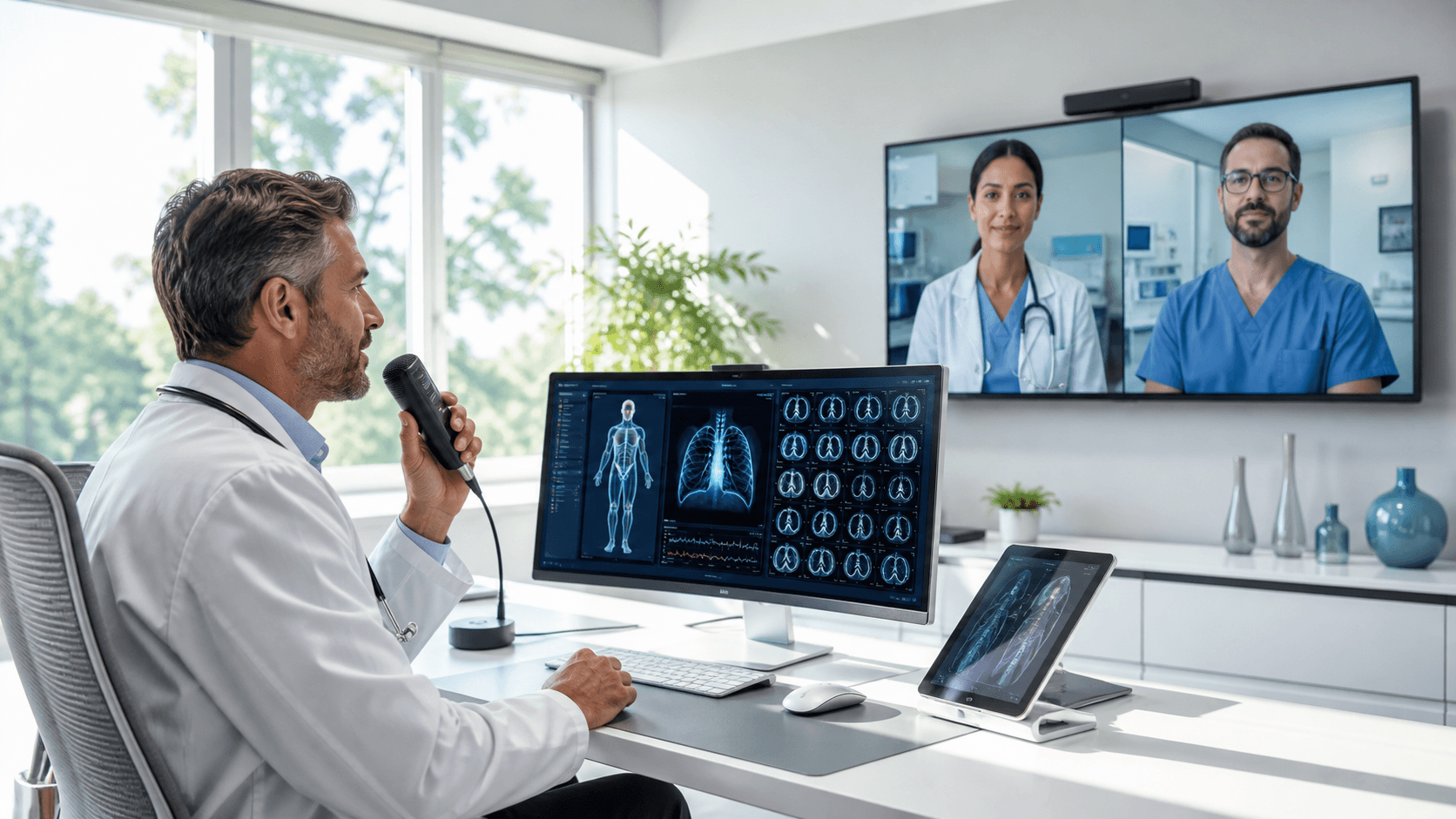
Dragon Medical One is a cloud-based medical speech recognition platform that turns your voice into real-time clinical documentation. Clinicians speak naturally, and the note appears directly in the EHR or in other applications they already use.
Some highlights of how it fits day-to-day work:
- Real-time, voice-driven documentation right at the point of care
- Ability to move between fields, sections, and templates with simple voice commands
- Support for structured notes so information is easier to find later
Because it is cloud-based, Dragon Medical One can be used from different locations and devices. That flexibility is helpful when:
- Covering telehealth visits from home or another office
- Providing after-hours call coverage
- Working in satellite clinics that are busier during spring and summer
The platform is built for medical use, with vocabularies and language patterns that match clinical care. Specialty wording, problem lists, and templates can be adapted to match existing workflows, so teams get a strong medical scribe alternative without adding more headcount.
Measuring ROI When Moving From Scribes to Dictation
When clinics think about moving from scribes to dictation, they often start with time. How many minutes does each clinician spend finishing notes after the last patient leaves? How often does charting spill into evenings and weekends?
With speech-recognition dictation in place, teams commonly see:
- Faster note completion during the visit
- Fewer after-hours charting sessions
- Smoother patient flow during peak appointment months
Cost containment and predictability also matter. Instead of dealing with ongoing hiring, training, and turnover, practices can move to a subscription model. This shifts the conversation from staffing levels to workflow design.
There is also the less visible, but very real, impact on clinician satisfaction and burnout. When providers can:
- Speak naturally instead of over-clicking the EHR
- Finish more documentation before leaving the clinic
- Trust that notes reflect their thinking clearly
they often feel more in control of their workday and their personal time.
How to Transition Safely From Scribes to Dictation
A smart transition does not mean flipping a switch overnight. A safer path usually starts with a small pilot. Choose a few tech forward clinicians or one service line that is ready to experiment. Give them space to:
- Learn basic commands
- Test voice-driven templates
- Share honest feedback with the larger group
Next, many practices do well with a blend and phase approach. For a set period, they run a hybrid model with both scribes and dictation. Over time, they scale back scribe hours as clinicians gain confidence and as workflows settle.
Training and support are key to making the shift stick. Helpful steps include:
- Short, focused training sessions instead of long, one-time classes
- Quick-reference sheets for common voice commands
- Clear communication about goals, timelines, and what success looks like
We see our role as a partner in that change, not just a software provider. Good onboarding and steady support help teams move away from fragile scribe models and toward documentation that is more secure, reliable, and clinician-friendly.
Discover a Faster, Smarter Way to Handle Documentation
If you are exploring ways to reduce charting time without sacrificing accuracy, we can help you compare your options side by side. Use our interactive calculator to see how medical scribe alternatives like Dragon Medical One stack up in cost, efficiency, and flexibility. In just a few minutes, you will get clear numbers to guide whether shifting from traditional scribes is the right move for your practice. Take the next step toward a documentation workflow that supports both your clinicians and your bottom line.