From Burnout to Breakthrough with Dictation
Clinicians are not burned out because they care too little, but because they are typing too much. Long after the last patient leaves, many providers are still in front of a screen, clicking through fields, wrestling with templates, and pecking away at notes that never seem to end. Healthcare dictation software changes that equation by letting providers speak naturally and create complete documentation as they work.
In this article, we will walk through why traditional typing creates hidden costs, how cloud-based medical speech recognition helps, and what to look for in the right solution. At Try Dragon Medical One, we see every day how the right dictation approach gives time back to clinicians, improves documentation quality, and reduces the strain of constant EHR use.
The Hidden Cost of Typing in Clinical Workflows
Traditional typing forces providers to split their attention. Instead of focusing fully on the person in the exam room, they are turning to the keyboard, trying to keep up with the story while clicking into the right structured field. The result is often a choppy narrative that does not match how clinicians actually think through complex cases.
That constant back and forth slows everything down. Visits stretch longer when providers are trying to type as they talk, and documentation backlogs pile up for work that is finished clinically but still stuck in the EHR. When clinicians stay late or take charts home, it is usually not because they saw too many patients, but because typing every detail simply takes longer than speaking it.
The human impact is hard to ignore. Many clinicians describe long stretches of “pajama time” at night, catching up on notes instead of resting or spending time with family. Over weeks and months, that erodes satisfaction and feeds burnout and turnover. Typing is especially painful in areas that rely on rich narratives, such as complex histories, multi-problem assessments, behavioral health, or procedural notes where every step matters.
Those are the moments when keyboards feel most limiting. Providers either type slowly and thoroughly or move quickly and shorten the story. Neither option is ideal for patient care, coding, or future clinicians who will read those notes.
How Healthcare Dictation Software Speeds up Documentation
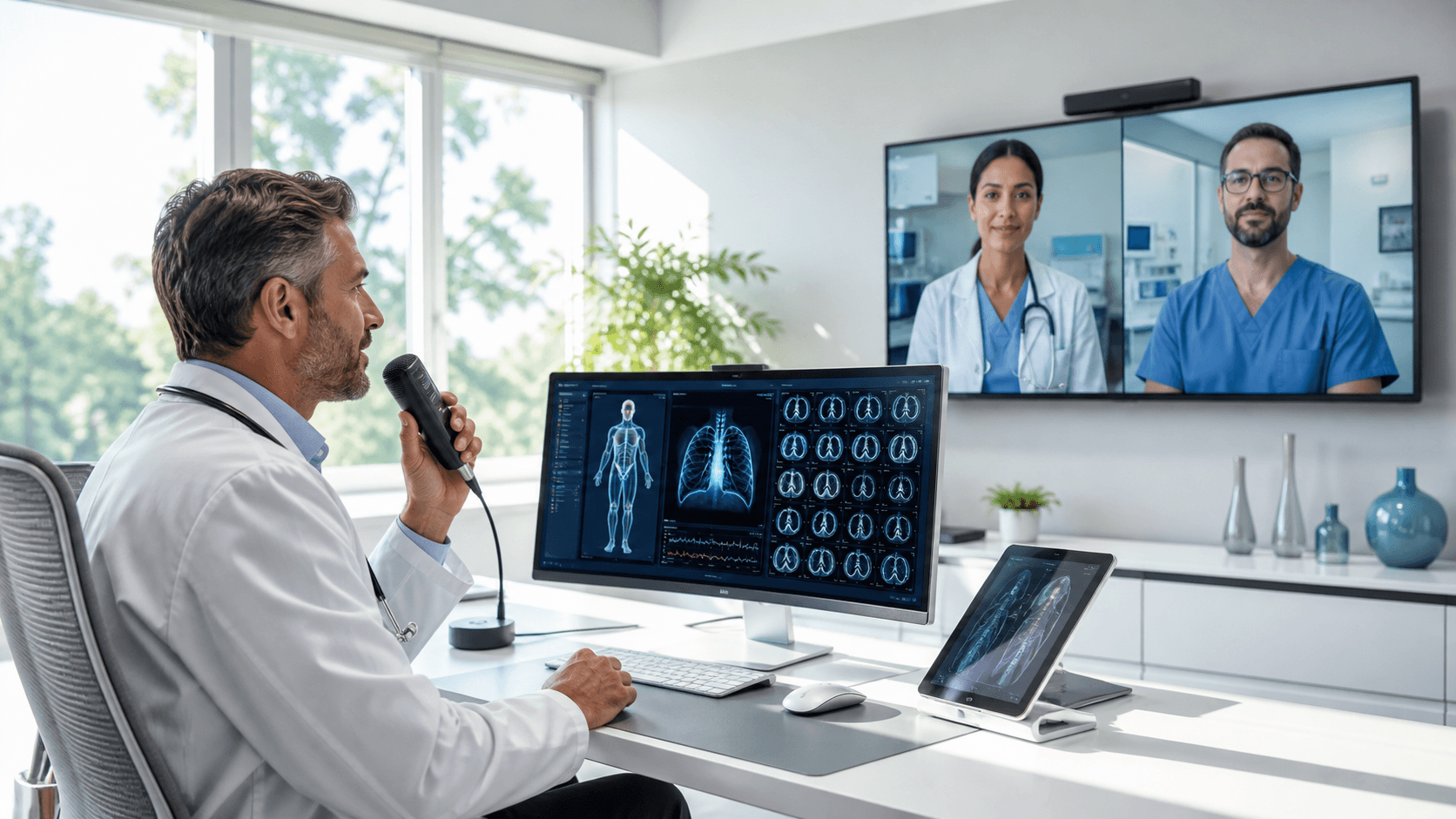
Healthcare dictation software flips that dynamic by letting providers tell the whole story out loud. Instead of trying to squeeze clinical reasoning into a template, they can speak through the history of present illness, exam findings, assessment, and plan in a natural flow. For most people, speaking is simply faster than typing, especially when notes are detailed.
With medical speech recognition that runs in the cloud, those dictated words appear directly inside the EHR or other Windows applications in real time. That reduces the need to jump between programs, copy and paste, or rely on separate transcription workflows. Clinicians can complete notes as they go, sign them, and move on to the next patient with documentation essentially finished.
Accuracy is the foundation of this approach. General-purpose dictation tools often struggle with medical terminology, drug names, or complex diagnoses. Healthcare dictation software is different. It is designed for clinical language, so it recognizes the words providers actually use all day. Because solutions like Nuance Dragon Medical One are cloud-based, they stay current and learn from real usage patterns, which helps improve both speed and accuracy over time.
For organizations, the benefits stack up. Shorter documentation time per note, fewer unfinished charts, and reduced dependence on manual transcription free up capacity for both clinicians and support staff.
Better Accuracy, Better Notes, Better Patient Care
Typing often encourages shortcuts. When someone is tired at the end of a long day, it is easy to default to brief phrases and minimal detail. With healthcare dictation software, it becomes much easier to include the subtle findings, patient quotes, and differential thinking that truly describe the visit.
Richer notes help everyone involved in care. When another clinician opens a chart, a clear narrative makes it simpler to see why decisions were made and what has already been ruled out. That helps support safer, more informed clinical decisions and smoother handoffs across settings or specialties.
Better accuracy has financial and compliance benefits as well. Detailed documentation supports more appropriate coding levels and reduces the risk of under-documenting the complexity of care. That, in turn, can help reduce denials and provide stronger support for quality reporting and audits.
Concerned about errors in dictation? Modern healthcare dictation software gives clinicians fine control. They can:
- Edit by voice, correcting single words or full sentences
- Use voice commands for formatting, headings, and templates
- Move the cursor, select text, and insert common phrases without touching the keyboard
That combination of speed and control helps build confidence quickly, especially for clinicians who are new to speech recognition.
Security, Compliance, and IT Simplicity in the Cloud
Any documentation tool in healthcare has to respect patient privacy and regulatory requirements. Modern healthcare dictation software is designed for HIPAA-aligned use, with encryption in transit and at rest, secure authentication, and role-based access to keep PHI protected.
Cloud deployment brings important benefits for IT teams. There is less dependence on on-premise servers, which reduces hardware and maintenance demands. Updates come through frequently without long upgrade projects, so clinicians gain new features and improvements without disrupting clinical schedules.
For multi-site practices and health systems, a cloud model also supports consistency. Providers can work from different locations with the same experience, which is especially useful for organizations with outreach clinics or rotating call schedules. Solutions like Nuance Dragon Medical One integrate directly with leading EHRs and Windows-based systems, which helps simplify rollout and support.
Choosing the Right Dictation Partner for Your Organization
Not all healthcare dictation software is created equal, so it helps to have clear criteria. When organizations evaluate options, we often recommend focusing on:
- Medical vocabulary depth across specialties
- Proven EHR and Windows integration
- Cloud performance and responsiveness
- Training, onboarding, and everyday support
- Flexible licensing to match staffing models
Implementation is just as important as the technology itself. A thoughtful rollout looks at current workflows, identifies where dictation fits naturally, and tailors voice commands and templates to each specialty. When we work with organizations, we pay close attention to how clinicians actually document so dictation feels like an upgrade, not an extra step.
It is also wise to involve clinicians early, from selection through pilot. When providers can test dictation in their real EHR environment, give feedback, and help refine commands, adoption goes up and resistance goes down.
Taking the First Step Toward Faster, Better Clinical Notes
Healthcare dictation software gives clinicians something they rarely receive: meaningful time back. Less typing means fewer late nights, more thorough notes, and a better balance between patient care and life outside the clinic. It also supports more reliable documentation that benefits clinical decisions, compliance, and the financial health of the organization.
The best way to see the difference is to look closely at current pain points. How much after-hours charting are providers doing? How often are notes left incomplete until the end of the day? How many EHR complaints are really complaints about typing and clicks?
A focused pilot with a small group of engaged clinicians can reveal how well a solution fits real workflows, what documentation time looks like before and after adoption, and how providers feel about their charting burden. With the right healthcare dictation software and thoughtful implementation, organizations can move from burnout to breakthrough, one spoken note at a time.
Streamline Clinical Documentation With Smarter Dictation
If you are ready to spend less time typing and more time with patients, our healthcare dictation software can help you modernize your documentation workflow. At Try Dragon Medical One, we combine accurate voice recognition with a simple, cloud-based setup so teams can get started quickly. Partner with us to reduce clerical burden, improve note quality, and support clinicians with tools that actually fit the way they work.