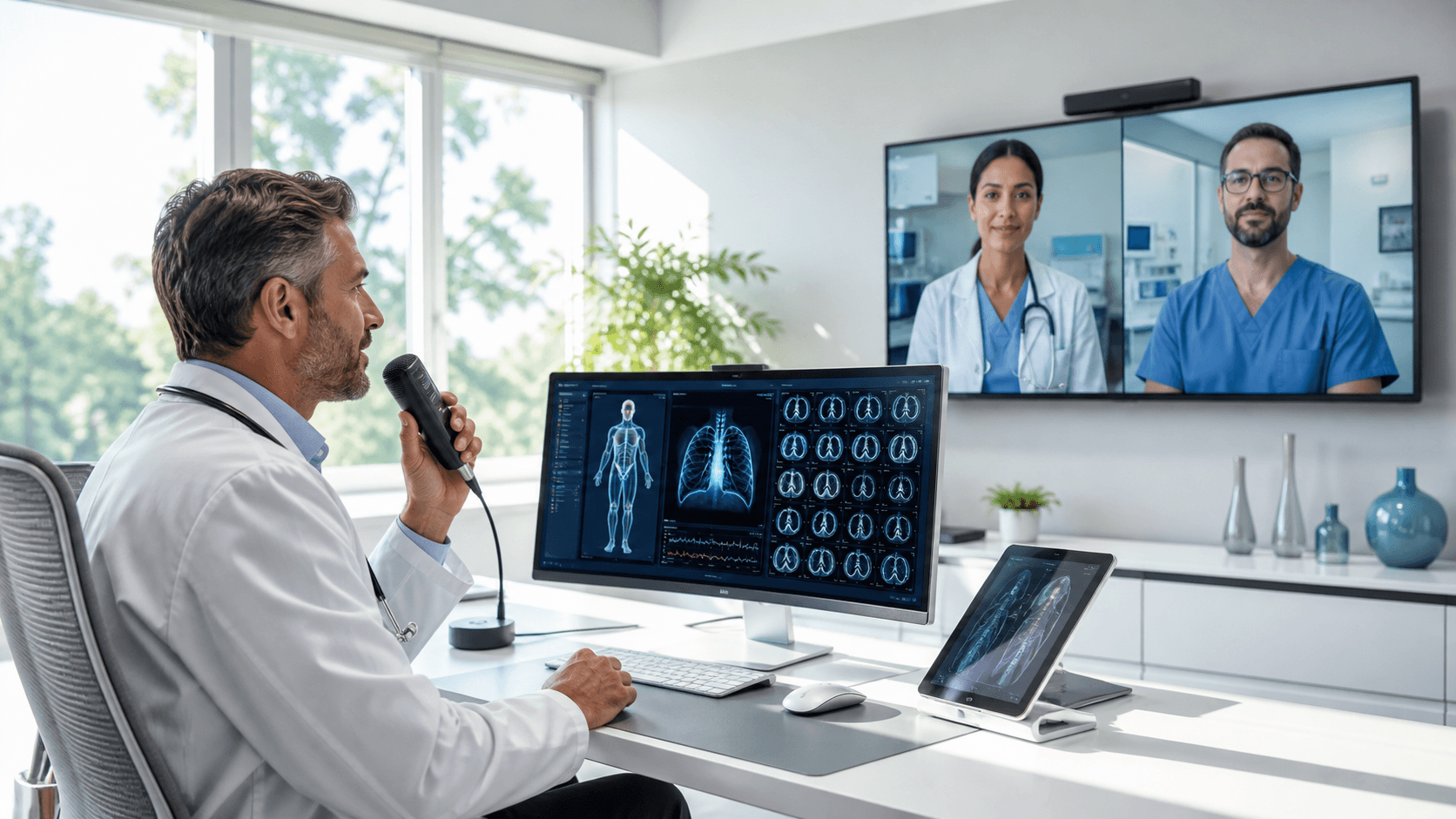
Enterprise Speech Recognition and Dragon Medical One Support
Enterprise medical speech recognition is quickly becoming a core strategy for health systems that want better notes, less burnout, and stronger data. When clinicians can speak naturally and see accurate, real-time text inside the EHR, documentation feels lighter and more human again.
In the middle of the year, leaders are looking ahead. Budgets, staffing plans, quality goals, and technology roadmaps all come into focus. This is where the gap between old-school dictation and true enterprise speech recognition really starts to show. Traditional dictation captures words. Enterprise medical speech recognition turns those words into structured, usable clinical insight.
At Try DMO, we are an authorized provider of Dragon Medical One and help organizations configure, implement, train for, and support the platform at scale. The goal is simple: less after-hours charting, cleaner documentation, and better data across the whole system, from hospitals to clinics to home offices.
Why Dictation Alone Is No Longer Enough
Many health systems still lean on legacy dictation and transcription. It technically works, but it keeps a lot of value locked away.
Here is what usually happens with traditional dictation:
- Providers record audio after the visit
- Transcription takes time and often involves extra staff
- Notes arrive late in the chart and need more editing
- Data stays buried in long narrative text
That delay can slow down care teams and frustrate clinicians who just want their notes done before they leave for the day. It can also lead to inconsistent quality, since every provider and department may be using different habits, templates, and shortcuts.
Common pain points we hear about include:
- Notes that vary a lot in structure and clarity across specialties
- Providers fighting with prebuilt templates that do not match real workflows
- Time lost fixing small errors and formatting problems in the EHR
- Difficulty pulling clear trends from free-text documentation
Enterprise medical speech recognition changes this by working right where clinicians already chart. Dragon Medical One, for example, is built to sit inside the EHR and respond in real time. Providers can speak, edit, and use voice commands to move through fields, apply templates, and insert smart phrases on the spot.
That means:
- Faster note completion inside the visit
- Specialty vocabularies that understand clinical terms and drug names
- Less need to jump between systems or wait on transcription
- A clearer path to showing real ROI and better clinician experience
Leaders who are planning next year's projects are under more pressure than ever to pick tools that actually lighten the load for their teams. Dictation alone rarely meets that bar anymore.
Building a Scalable Enterprise Speech Recognition Strategy
Treating speech recognition as a single software install is a quick way to get uneven results. Treating it as an enterprise strategy is how you get long-term impact.
Strong programs usually start with clear goals, such as:
- Reduce average time to close encounters
- Cut down on after-hours charting for key specialties
- Improve clarity and completeness of notes for quality reporting
- Support remote and hybrid clinicians with flexible tools
To reach those goals, you need structure. That often includes an executive sponsor, clinical champions, and a governance group that brings together IT, clinical, informatics, and operations. This group sets direction, defines standards, and measures progress.
On the technical side, there are a few big decisions to work through:
- Cloud versus on-premises, especially for uptime and remote access
- Single sign-on, so clinicians do not juggle extra passwords
- High availability across hospitals, clinics, and telehealth settings
- Performance for both on-site devices and home setups
Enterprise standards are just as important as technology choices. Health systems that do this well usually agree on:
- Common template patterns and note structures
- Specialty-specific configurations that still follow shared rules
- Quality benchmarks that apply across service lines
With Dragon Medical One, and Try DMO providing configuration, implementation, training, and support, organizations can manage all this from the center while keeping room for personal preference. A cardiologist and a pediatrician may use different templates and commands, but they are still working on the same foundation and reporting framework.
Driving Adoption Across Departments and Specialties
Even the best tool falls flat if people are not on board. Enterprise medical speech recognition is as much about change management as it is about microphones and software.
Successful programs tend to:
- Explain the "why" clearly to clinicians and staff
- Set realistic expectations about the learning curve
- Make leadership support visible and consistent
- Share quick wins early to build momentum
A phased rollout often works best. Many organizations start with high-impact areas like the ER or primary care, where small time savings per note add up quickly. They run pilots, gather feedback, adjust templates and commands, then expand into inpatient units, specialty clinics, and telehealth.
Training is where adoption really takes off. Helpful elements include:
- One-on-one coaching for providers who want deeper support
- Specialty playbooks with suggested commands and templates
- Short, focused tip sessions during standing meetings
- Super-users in each department who can help peers in real time
Seasonal timing matters too. Summer and early fall can be ideal for training and optimization, before winter respiratory season picks up and exam rooms fill even more. When clinicians enter their busiest months with speech recognition already tuned to their workflow, they are far more likely to keep using it and refining it.
Turning Speech Data Into System-wide Intelligence
Once enterprise medical speech recognition is in steady use, the benefits go well beyond faster note entry.
Consistent spoken notes, captured in real time, tend to be:
- More complete, with key details less likely to be skipped
- Clearer for other clinicians who need to follow the story
- Timelier inside the EHR, which helps the entire care team
Those stronger notes create better data. Over time, patterns start to stand out, such as:
- Spots where problem lists or medication lists are often left incomplete
- Differences in time-to-close between clinics or service lines
- Repeated bottlenecks that point to staffing or workflow issues
This has downstream impact on coding, queries, and population health work. Cleaner documentation supports more accurate risk adjustment, fewer back-and-forth questions, and a stronger base for analytics and AI projects that depend on reliable clinical text.
Because enterprise medical speech recognition touches many encounters across the system, leaders can compare performance over longer periods, track adoption, and connect that to productivity, satisfaction, and financial results. The day-to-day use of speech recognition starts to feed a larger picture of how the organization is doing and where to improve next.
Launching Your Enterprise Speech Recognition Roadmap
Shifting from scattered dictation tools to a unified enterprise medical speech recognition platform is not just a tech upgrade. It is a chance to reduce burnout, strengthen clinical data, and prepare your organization for more advanced documentation and analytics tools down the road.
A simple starting framework for the next few months might include:
- Assess current documentation workflows and pain points
- Define clear enterprise goals and success measures
- Select pilot sites and clinical champions
- Map out training, support, and governance
At Try DMO, we focus on helping health systems configure, implement, train for, and support Dragon Medical One as a true enterprise asset, not just another icon on the desktop. When Dragon Medical One medical speech recognition is aligned with strategy, structure, and support, it turns into something much more powerful: ongoing clinical and operational insight that grows with your organization.
Transform Clinical Documentation Efficiency With Smarter Speech Workflows
If you are ready to reduce documentation time while improving accuracy, we can help you make the shift from traditional transcription to medical speech recognition workflows with Dragon Medical One. Explore how our enterprise medical speech recognition solution fits into your existing systems and supports your clinical teams. At Try DMO, we work closely with your organization to align Dragon Medical One configuration, training, and support with your real-world workflows. Start modernizing your documentation process today so your clinicians can focus more fully on patient care.