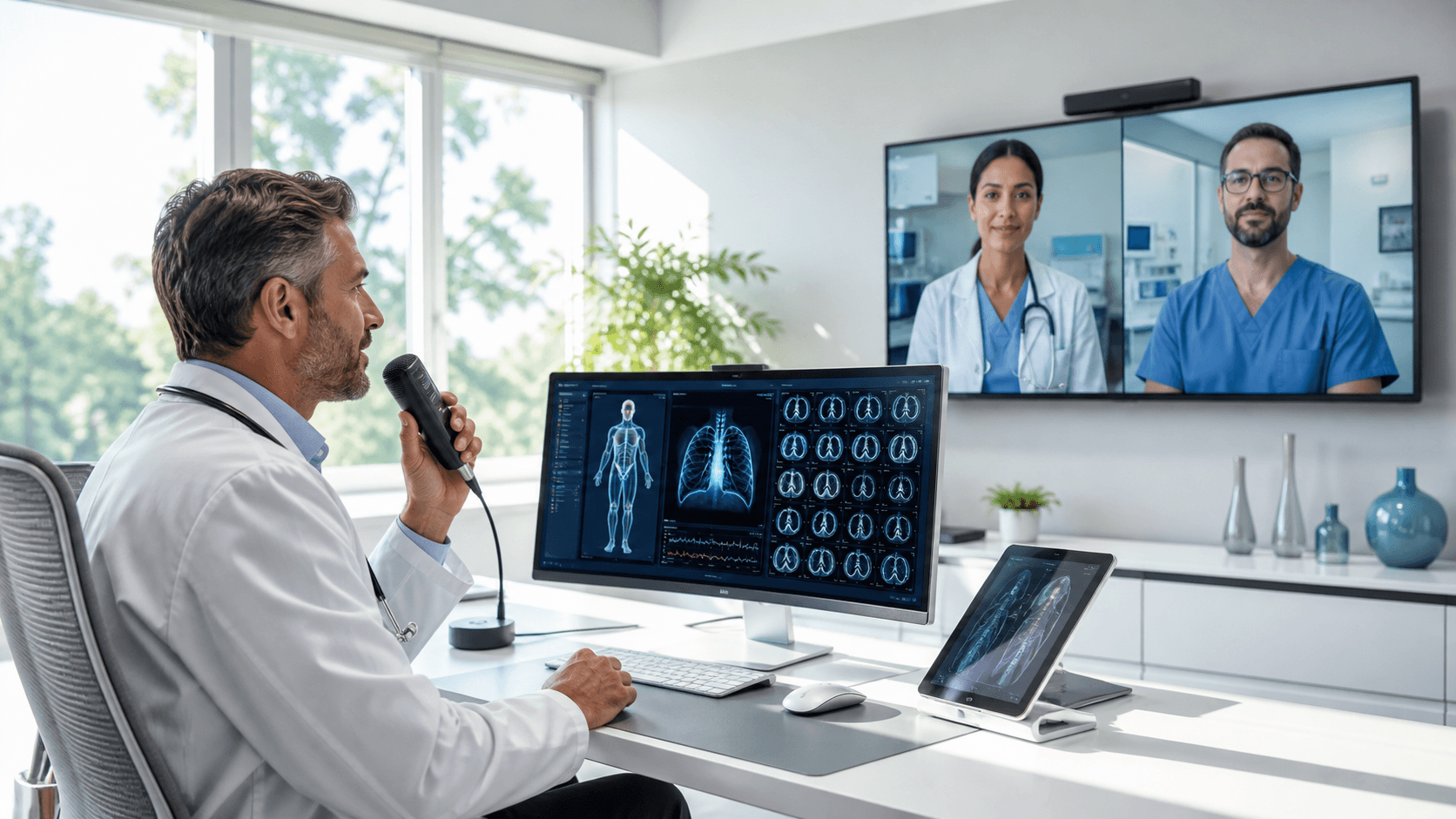
Outpatient clinics are under real pressure. Patient schedules are packed, staff are stretched, and the EHR never seems to stop asking for more clicks. When visit volume jumps in the summer and before school starts, the stress around documentation only grows. Many providers end up finishing notes late at night, trying to remember small but important details from a very long day.
EHR speech recognition gives clinics another way to work. Instead of typing, clicking, and hunting for the right field, providers can speak natural clinical language and let the system do the heavy lifting. In this article, we will walk through why outpatient documentation feels so hard, how speech recognition fits into the visit, and why a cloud-based option like Dragon Medical One can help clinics keep up when volumes spike.
Cut Documentation Time While Visit Volumes Climb
Outpatient teams feel the squeeze from every side. Patient demand keeps rising, schedules get tighter, and value-based care and quality reporting add more boxes to check. At the same time, many clinics are short on staff, so providers pick up extra work outside the exam room.
Manual typing slows everything down. Click-heavy EHR workflows break focus, pulling attention away from patients and into drop-down menus and tiny text fields. The result is familiar:
- Notes spilling into evenings and weekends
- Frequent logins from home to close charts
- A growing sense of burnout and frustration
EHR speech recognition offers a practical way to reclaim time without changing your EHR. With a cloud-based tool, providers can speak their notes in real time, finish more charts before leaving for the day, and protect their own energy during the busy summer and back-to-school rush.
Why Outpatient Clinics Struggle to Keep up
Outpatient care has its own set of documentation pain points. Visit slots are short, and the risk of no-shows or last-minute add-ons is always there. During warmer months, schedule patterns change, and clinics see a spike in:
- Sports and camp physicals
- Chronic disease tune-ups before travel
- Travel consults and vaccine discussions
- Follow-up visits squeezed in around family plans
Each visit type needs its own details, templates, and checklists. Many providers jump between templates, macros, and free-text typing, trying to keep up while staying on time. This kind of fragmented workflow often leads to partial notes, heavy copying and pasting, and charts that stay open until late at night.
Those gaps do more than slow people down. When documentation lags:
- Billing can be delayed, which affects revenue flow
- Important history or exam details can be missed
- Providers carry a constant feeling of being behind
Over time, that repeated stress makes it harder to stay focused, present, and satisfied in the job.
How EHR Speech Recognition Transforms the Exam Room
EHR speech recognition is simple at its core. It is real-time speech-to-text that lets providers talk and see their words appear directly in the EHR. Because it is cloud-based, there is no need for local servers or heavy installs, and updates come through in the background.
When documentation happens at the point of care, with voice instead of typing, several things shift right away. Providers can:
- Speak in natural clinical language
- Capture full stories, assessments, and plans
- Keep better eye contact with patients
Instead of hunting for the right button, a provider can talk through the history, exam, and plan while still engaging with the person in front of them. Advanced tools like Dragon Medical One, provided by TryDMO, add more support by offering:
- Specialty vocabularies for different types of clinics
- Simple voice commands for correcting text
- Navigation phrases to move through key parts of the chart by voice
This helps keep the visit flowing, even when the schedule is tight.
Key Benefits for Clinics Under Volume Pressure
For clinics facing high volume, time is the first and most obvious benefit. When providers can speak instead of type, they often spend less time per note and are more likely to close charts the same day. That can open up space for a few extra visits in busy months or simply allow the team to leave on time more often.
Better documentation quality is another major gain. Medical-grade speech engines are built for clinical language, so they can capture subtle findings and complex terms more faithfully than quick typing. That can support:
- Clearer histories and assessments
- More specific coding and problem lists
- Stronger support for quality reporting and audits
There is also a human side to this. When documentation is easier and fits the way clinicians think and talk, the mental load drops. Less "pajama time," fewer half-finished notes, and a cleaner end to the workday all support better provider satisfaction. In a competitive outpatient market, that can matter just as much as schedule templates or benefit packages.
Making EHR Speech Recognition Work in Your Workflow
The key to success with speech recognition is planning. It works best when it is rolled out with real workflows in mind, not as a one-off tool. A practical approach often includes:
- Starting with a pilot group of engaged users
- Focusing on high-volume areas like primary care, pediatrics, or orthopedics
- Aligning go-live with internal training plans instead of your busiest weeks
Change management matters too. Short workflow sessions can help providers see where voice fits their current routine. Role-based training lets physicians, NPs, PAs, and scribes learn commands that match how they use the EHR. Peer champions who share templates and voice commands often help adoption move faster and feel more natural.
To see if it is working, clinics can track metrics such as:
- Time to close charts after each clinic session
- Average visits per provider per day
- Denials that relate to documentation clarity
- Provider satisfaction or well-being survey scores
Over a few months, these numbers can show clear patterns and guide any needed tweaks.
Why Cloud-Based Dragon Medical One Fits Busy Clinics
Cloud-based speech recognition lines up well with the way outpatient clinics work. Providers move from exam room to office to telehealth space, and sometimes between different buildings. With a cloud solution, they can use their voice profile on different devices without long setup or local installs. Adding new clinicians or temporary staff is faster too, since user provisioning happens centrally.
Dragon Medical One, delivered by TryDMO, is built to connect with leading EHRs used in outpatient settings. Clinics can keep their existing templates, order sets, and workflows, while speech speeds up the entry of notes, histories, and plans. Voice navigation can help providers move through sections more smoothly, instead of relying only on keyboard and mouse.
Security and compliance are always part of the conversation for healthcare IT teams. Cloud-based medical speech recognition is designed with HIPAA in mind, using encryption and access controls to protect patient data. Audit capabilities help leaders see how the tool is used and support compliance with their internal policies.
When outpatient clinics bring these pieces together, documentation starts to feel more supportive and less like a constant race against the clock.
Cut Your Documentation Time With Smarter Dictation
If you are ready to spend less time typing and more time with patients, we are here to help. Our EHR speech recognition is built to fit naturally into your existing workflows so you can document faster without sacrificing accuracy. At Try DMO, we work closely with your team to configure and support the solution around your specialty and practice needs. Start simplifying your clinical documentation today and see how much more you can get done in every visit.