Make Every Fracture Follow-up Easier to Document
Fracture follow-ups need a clear record of what has changed since the injury and what should happen next. Each note may need to cover healing progress, imaging findings, treatment decisions, and patient instructions. When the record is organized, we can help clinicians see the full path from the first injury through recovery.
Busy orthopedic clinics often balance repeat imaging reviews, cast or brace checks, changing restrictions, and full schedules. Medical speech recognition support for Dragon Medical One gives clinicians a practical way to dictate findings and review documentation efficiently. Still, we recommend that every clinician carefully review and confirm dictated content before signing the record.
Why Fracture Follow-Ups Need Complete Clinical Notes
A follow-up may look routine on the schedule, but the details can be different from the previous visit. Pain may be improving while swelling remains present. Range of motion may increase, yet the patient may still have trouble with work, school, sports, or daily tasks. Capturing those changes gives the care team a clearer view of recovery.
For a consistent fracture follow-up note, we recommend documenting items such as:
- Injury location, laterality, date of injury, and fracture type
- Current symptoms, pain level, swelling, and functional limitations
- Range of motion, tenderness, and neurovascular status
- Changes in medication use, immobilization, or activity tolerance
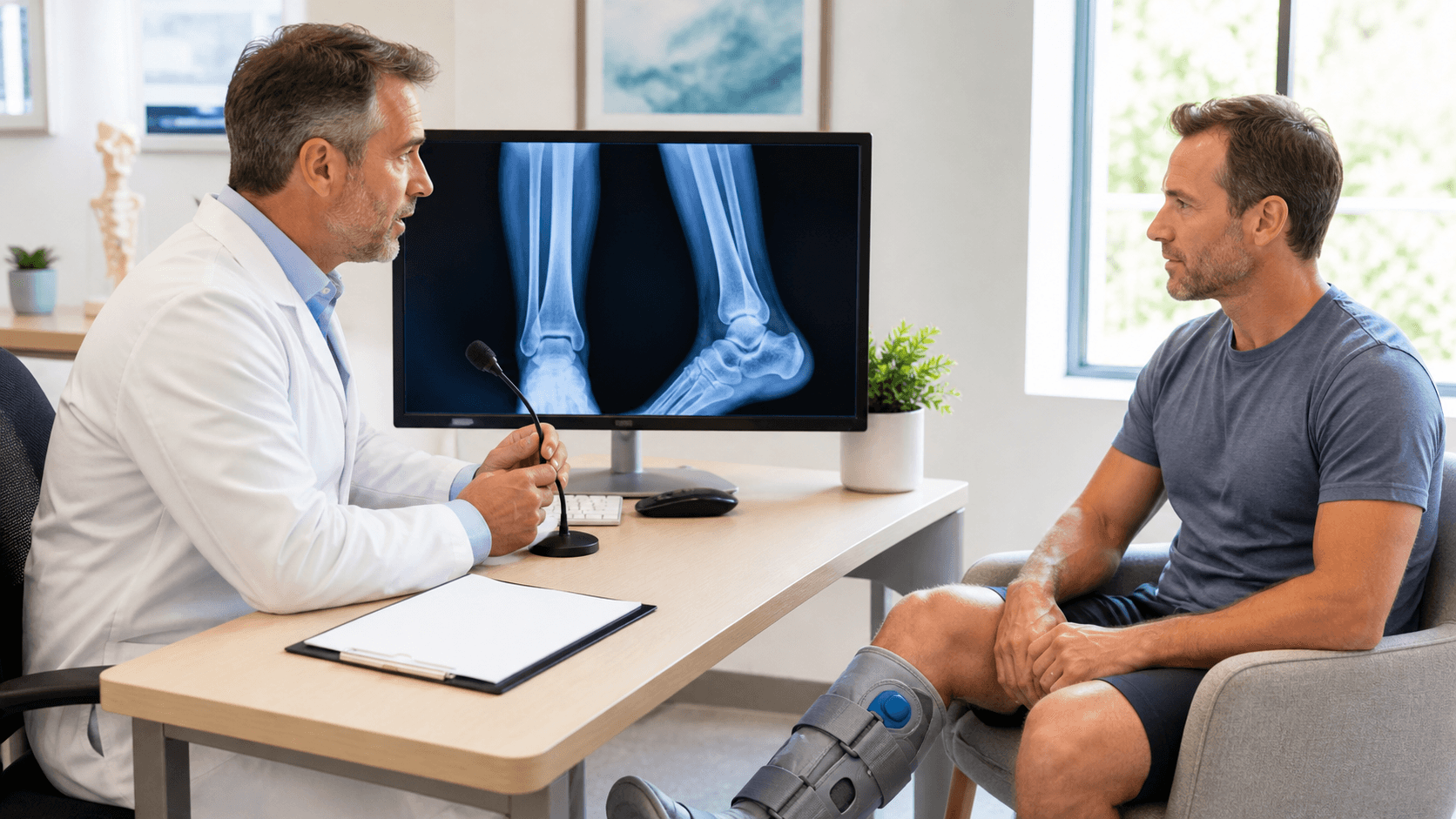
Imaging review also belongs in the note, not just in the image record. Clinicians may document whether alignment is maintained, whether callus formation or other healing signs are present, and whether the findings support the current plan. Depending on the clinical situation, that plan may include continued conservative care, new activity limits, additional imaging, or referral.
Clear instructions matter just as much as the exam. We encourage teams to record weight-bearing status, cast or brace guidance, therapy recommendations, medication discussions, work or school restrictions, and the timing of the next visit. This structure supports continuity when more than one clinician takes part in the patient's care.
How Orthopedic Dictation Software Fits Follow-up Workflows
During a fracture follow-up, clinicians often need to review the patient, images, prior notes, and treatment history in a short window of time. Orthopedic dictation software can support that work by letting clinicians speak observations as they examine the patient or review imaging. This can make it easier to capture details while they are still fresh.
With Dragon Medical One, we support medical speech recognition features that include specialty vocabularies, voice commands, AutoTexts, and roaming profiles. Those tools can help clinicians document in a format that fits orthopedic care while using terms that are familiar to their specialty.
A practical workflow may include dictating a focused assessment after the exam, then adding the treatment plan while imaging is being reviewed. Reusable text can help with common follow-up language, while individualized details should explain the patient's current healing status, restrictions, and instructions. Before a note is finalized, clinicians should review it for completeness, clinical accuracy, and patient-specific context.
Document Healing Milestones and Treatment Changes
Healing is not always a straight line, and follow-up documentation should show what the clinician sees at that point in care. Expected progress may include less pain, reduced swelling, stable alignment, or a gradual increase in range of motion. The note can also capture concerns that need closer attention, such as persistent tenderness, changes in weight-bearing tolerance, or possible delayed union concerns.
Clinical notes should connect the findings to the care decision. For example, a clinician may document imaging impressions and exam findings that support continuing a cast or brace. If the plan changes, the note can explain why restrictions were adjusted, why rehabilitation was added or changed, or why repeat imaging is planned.
Helpful follow-up documentation often makes the next steps easy to find:
- What the patient may do now, based on the clinician's plan
- What activities or weight-bearing should still be avoided
- Warning signs that should prompt contact with the practice
- When clinical reassessment or repeat imaging is expected
Plain language supports patient understanding, while a complete clinical record supports the care team. We find that a note works best when it gives enough detail for another clinician to understand both the current condition and the reason behind the plan.
Standardize Orthopedic Dictation Software Content
Repeatable structures can make common fracture follow-ups easier to document without making every note sound the same. A useful framework may include interval history, pain and medication updates, physical examination, imaging review, assessment, treatment plan, restrictions, and return timing. Clinicians can then spend more attention on the details that are unique to the visit.
AutoTexts and voice commands in Dragon Medical One can support commonly used documentation language. A clinician might use reusable phrasing for a routine cast check, stable fracture alignment, a planned imaging review, or standard activity precautions. Patient-specific findings should always be added so the record reflects the actual exam, images, and treatment decision.
Each orthopedic practice has its own terminology, workflows, and compliance needs. For that reason, we recommend reviewing reusable content regularly. Templates should remain flexible enough to fit different fracture types, age groups, treatment approaches, and provider preferences, while still giving clinicians a familiar starting point for each follow-up.
Prepare Your Team for Fall Fracture Follow-Ups
October can bring fuller orthopedic schedules as fall sports continue, weather changes affect daily activity, and end-of-year appointment demand begins to build. Before those busy periods add pressure, we encourage teams to look at how fracture follow-ups are documented, reviewed, and shared across the practice.
Accurate notes still depend on clinical expertise, consistent processes, and careful final review. Medical speech recognition support for Dragon Medical One can help clinicians capture follow-up details efficiently through specialty vocabularies, AutoTexts, voice commands, and roaming profiles, while keeping the clinician in control of the final documentation.
Support More Efficient Fracture Follow-Up Documentation
See how orthopedic dictation software can support clearer, more consistent documentation across fracture follow-up visits. Our team at Try DMO can help you evaluate Dragon Medical One features for your orthopedic workflow. Build a documentation process that supports your clinical priorities without adding unnecessary steps.