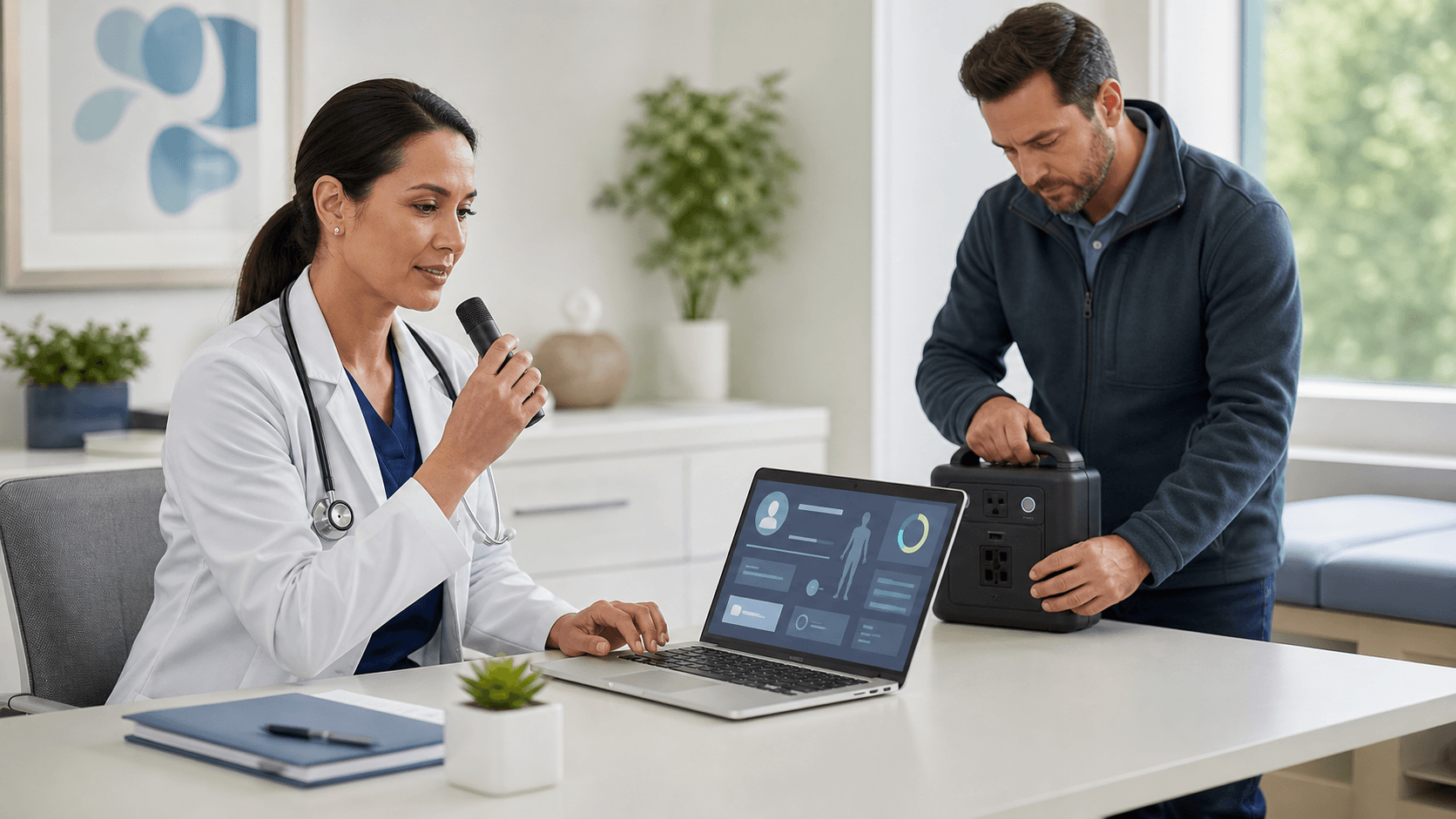
Peak-season surges hit hard in healthcare. Volumes spike, staff is stretched, and documentation piles up until late at night. This playbook walks through how to use rapid-deploy voice-to-text for healthcare so teams can keep notes same-day, even when the waiting room is full and everyone is tired.
We will look at why traditional charting falls apart during busy months, how cloud-based voice tools like Dragon Medical One can be rolled out fast, and how to support clinicians with training, templates, and triage note standards that actually work under pressure.
Make Peak-Season Volumes Safer and Faster to Document
Summer and early fall can feel like one long rush. Respiratory bugs, sports injuries, heat illness, travel issues, plus the usual chronic care all hit at once. At the same time, there are vacations, open roles, and burnout. That mix is rough for urgent care, EDs, hospitalist teams, and busy clinics.
When documentation lags behind care, the problems stack up. Charts stay open for hours, handoffs get rushed, and people try to remember details at the end of a 12-hour shift. That is risky and stressful.
Cloud-based voice-to-text for healthcare gives another option. Instead of typing long notes, clinicians speak into the chart in real time. With tools like Dragon Medical One, teams can:
- Cut down on after-hours charting
- Close more notes before the end of the shift
- Keep details accurate while the visit is still fresh
Because Dragon Medical One is cloud-based, it can be rolled out with light IT work and scaled up during peak months, then leveled out as volumes calm.
Why Peak Seasons Break Traditional Documentation Workflows
During a surge, everything speeds up and stretches out at the same time. There are more patients, more complex visits, and more cross-coverage. Schedules fill with locums, travelers, and per-diem staff who may not know the local EHR build or workflows.
Traditional, keyboard-heavy charting struggles under that kind of pressure. Common trouble spots include:
- Heavy copy-paste use that skips important nuance
- Overreliance on long templates that are not fully updated
- Notes started in the room but finished many hours later
This can lead to documentation that feels thin or generic. Important negatives are missing, decision-making is vague, and it is harder to support coding and compliance. Operations take a hit too. When notes are not done, billing and coding wait. After-hours charting grows, which hurts morale and makes retention harder over time.
Rapid-Deploy Voice-to-Text for Healthcare Teams Under Pressure
Cloud-based voice-to-text for healthcare is built for speed and scale. Because there are no on-premises servers to manage, IT teams can move faster. Provisioning is simpler, and multi-site systems can turn on access without long hardware projects.
When time is tight and volumes are high, the key is to start with the right workflows:
- History and physical notes for hospitalists and primary care
- ED and urgent care triage and provider notes
- Discharge summaries that must be clear and timely
- Consult notes where communication is critical
- Procedure documentation that supports coding and safety
A rapid deployment does not mean chaos. It means a focused, short rollout with clear goals. In practice, that often looks like:
- Planning in days instead of months
- Defining success by note completion time and after-hours work
- Starting with one or two departments, then expanding once patterns are working
After the peak months, teams can review results, fine-tune templates, and then scale to more areas with less pressure.
Fast-Track Training That Clinicians Will Actually Use
For voice-to-text to help in a surge, training has to fit real life. Long classroom sessions do not work when the waiting room is full. A focused, 72-hour plan keeps things practical and short.
A simple approach might include:
- Brief role-based micro trainings under 30 minutes
- Quick reference cards at workstations
- On-shift support where a trainer or super-user rounds and helps in real time
With Dragon Medical One, there are a few core skills that pay off right away:
- Basic dictation and editing by voice
- Simple navigation commands in the EHR
- Using and editing smart phrases
- Fast corrections so accuracy keeps improving
For peak-season adoption, it helps to:
- Name one or two super-users per shift who can coach peers
- Set "good, better, best" usage goals instead of strict rules
- Share simple dashboards that show time saved and same-day completion gains
When clinicians see clear wins in their own day, they stick with the new workflow.
Plug-and-Play Templates for High-Volume Peak-Season Visits
During busy months, the same visit types show up all day. That makes templates a powerful tool, especially when paired with voice. A small, focused library inside Dragon Medical One can cover high-volume concerns such as:
- Upper respiratory infections
- Otitis and sore throat visits
- Asthma exacerbations
- Minor injuries like sprains or simple lacerations
- Heat illness and dehydration
- Travel-related complaints
Good templates are built for both speed and safety. They usually include:
- Problem-focused HPI with prompts for key symptoms
- Pertinent positives and negatives tied to common risks
- Sections that cue decision reasoning, not just checkboxes
- Prompts for red flags and clear follow-up instructions
The best results come from using templates as a frame and dictation for the story. The clinician pulls in a template, then fills in nuance, patient quotes, and reasoning by voice. That keeps notes personal, accurate, and ready for coding without turning into a wall of cloned text.
Standardized Triage Notes That Survive the Surge
ED and urgent care triage can feel like the eye of the storm. When every chair is full, triage notes must be clear, fast, and consistent. They have to support safe handoffs, especially when the team changes multiple times in a day.
A simple, standard triage note structure might include:
- Chief complaint in the patient's own words
- Onset, duration, and severity
- Key risk factors and comorbid conditions
- Vital red flag symptoms for that complaint
- Home treatments already tried
- Clear disposition or escalation cues
Voice-to-text helps triage staff keep this structure without slowing down. Standard phrases, required elements, and smart templates can be filled in by voice while still facing the patient. That helps every clinician who touches the chart trust what was captured, even during the busiest hour.
Turn This Playbook Into a 30-Day Peak-Season Pilot
A short, focused pilot can turn all of this from theory into daily practice. Many organizations start by choosing one or two high-volume areas, like urgent care and hospital medicine, and then setting clear metrics such as:
- Time from visit end to chart completion
- Percentage of notes closed the same day
- Overtime or after-hours charting minutes
A simple governance model keeps the pilot on track. One clinician champion, one IT point person, and one documentation lead can review early data every week. Together they adjust templates, update triage standards, and share quick wins and lessons across teams.
As an authorized Dragon Medical One provider, we at Try DMO focus on helping healthcare organizations stand up this kind of rapid, cloud-based voice-to-text workflow so they can enter peak seasons with faster documentation, clearer notes, and fewer late-night charting sessions.
Transform Clinical Notes Into Clear, Actionable Records Today
If you are ready to reduce documentation fatigue and reclaim more time for patient care, Try DMO is here to help. Our voice-to-text for healthcare solution streamlines your clinical workflows while maintaining accuracy and compliance. Get started now so your team can spend less time typing and more time practicing medicine.