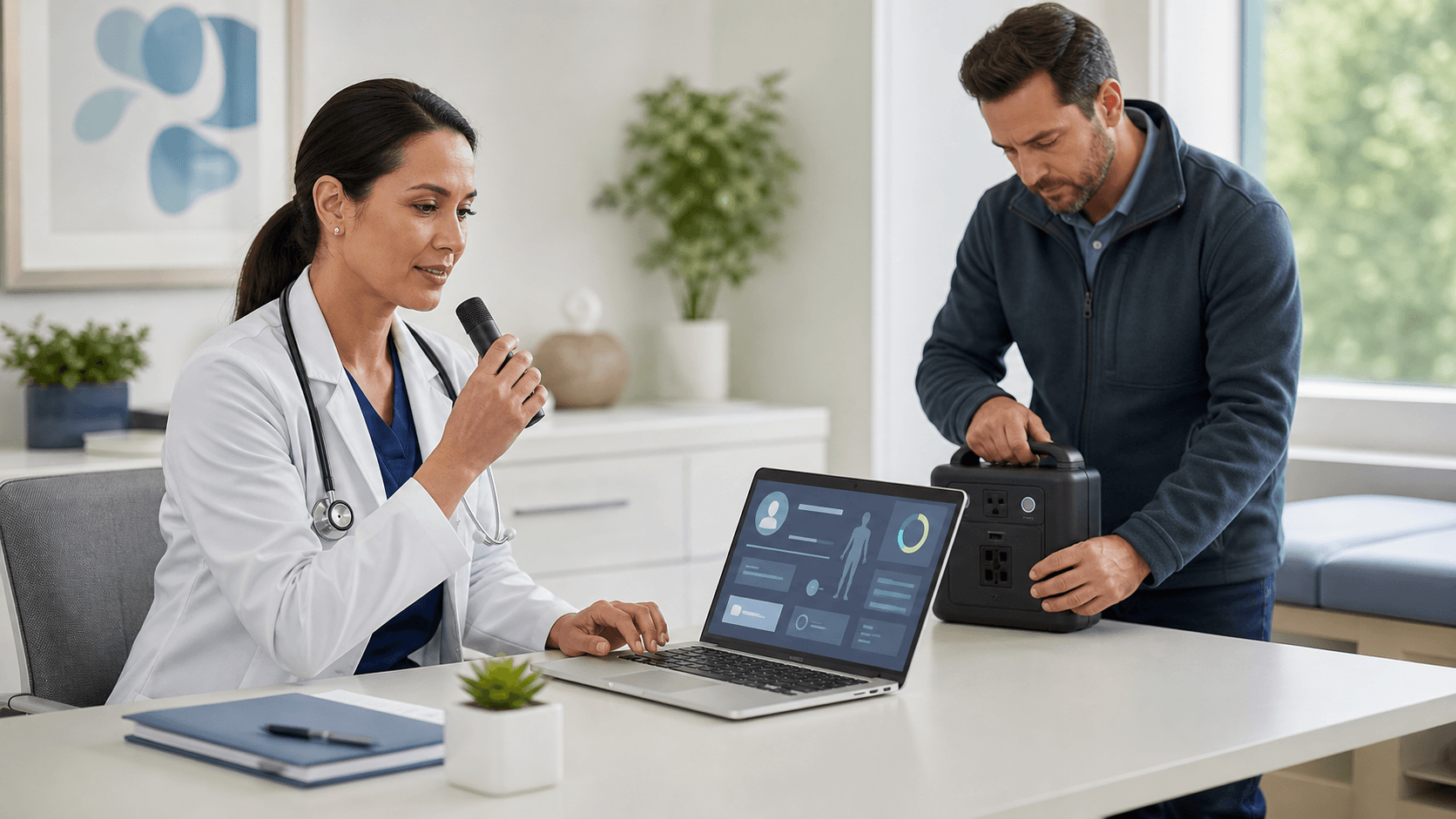
Turn Subscription Choices Into Strategic Practice Growth
Cloud medical dictation is not just a tech choice; it is a growth decision for your practice. When your schedule fills up, your charting time usually shrinks. Summer can make this even harder, with more visits packed into fewer clinic days and vacation coverage stretching your team thin. Notes pile up, inboxes grow, and evenings disappear into the EHR.
A medical dictation software subscription can either calm that storm or add new headaches. Pick the wrong setup and you get hidden limits, clunky workflows, and more steps for your clinicians. Pick the right one and you get faster, cleaner notes with less after-hours work. Our goal is to help you see the difference so you can grow without burning out your team.
We work with Nuance Dragon Medical One in the cloud, with speech recognition designed for clinical work and integrated with leading EHRs. Our focus is simple: secure, HIPAA-aligned documentation that fits real-world workflows. In this article, we will walk through how to think about subscription choices, what features actually matter, and how to roll out dictation across growing, multi-location practices.
Why Growing Practices Outgrow Legacy Dictation
When a practice is small, it can get by with old-school tools. A few handheld recorders, some manual transcription, maybe an on-premise speech system on one or two workstations. But growth changes the math fast.
As your patient panel expands, you may see:
- Extra visits for sports injuries and outdoor accidents in warm weather
- More travel-related care and vaccine visits before trips
- Pre-op clearances and follow-ups squeezed between routine care
- Additional locations or extended hours to keep up with demand
Legacy dictation often cannot keep pace with that kind of volume. The hidden costs of "making do" show up as:
- Overtime and late-night charting that cut into family time
- Delayed notes that slow coding and billing
- Compliance worries when documentation lags behind care
- Clinicians feeling rushed and drained by the end of the day
Cloud-based medical dictation software subscriptions are built for this kind of growth. Because the tools live in the cloud, updates and improvements roll out without you having to manage servers. Clinicians can use the same voice profile across rooms, sites, and telehealth sessions. As you plan the next 12 to 18 months, this kind of flexibility can be the difference between controlled growth and constant fire drills.
Key Subscription Features That Actually Matter
Many products come with long feature lists, but not all features help you finish a note faster. The real test is simple: does this tool fit the way your clinicians already work?
Tight alignment with your EHR is one of the biggest factors. When speech recognition flows directly into:
- Your standard templates and smart phrases
- Common macros and auto-texts
- Problem lists, assessment and plan, and orders
you cut down on clicks and rework. Clinicians can speak naturally, trigger the commands they know, and move through a chart in a steady rhythm. That saves more time than any shiny feature that sits outside the EHR.
Performance also affects day-to-day clinic life. On high-volume days, any lag can throw off your schedule. Key questions to ask include:
- What uptime does the vendor commit to?
- How does speech accuracy hold up across different specialties?
- Does performance stay steady when multiple locations are busy at once?
- How does it handle telehealth, remote work, or shared devices?
If your system stalls every time the waiting room is full, your clinicians will give up on it fast.
Pricing Models That Support Sustainable Growth
Not all subscriptions are structured the same way. The pricing model shapes how easy it is to grow, flex, and cover vacations without stress.
Per-user subscriptions are simple: each clinician has their own license. This can work well for steady teams with stable staffing. Pooled or shared approaches can fit practices that rely on:
- Locums, moonlighters, or per diem coverage
- Seasonal staffing boosts in busy months
- Part-time providers who split time across locations
Beyond the base subscription, think about total cost of ownership. That includes:
- Training time for clinicians and staff
- Implementation support to connect with your EHR
- Admin effort to manage users and devices
- The time you expect to save on each chart
Recovered clinician hours are often the biggest "return," even if they do not show up as a line item. Less time in the EHR can mean more capacity for visits, teaching, or simply leaving the office on time.
You also want to avoid feeling stuck. Before you sign anything, look at:
- Auto-renewal dates and notice periods
- Data export options if you ever change vendors
- Minimum license counts or long-term commitments
- How upgrades or added features are handled mid-term
Clear terms give you space to grow or adjust without surprise changes to your plans.
Implementation Strategies for Multi-Location Practices
Once you choose a medical dictation software subscription, the rollout can make or break your results, especially if you have more than one location or a mix of in-person and telehealth.
Standardizing where it counts helps keep quality consistent. This can include:
- Shared templates for common visit types
- Agreed phrasing for problem lists and assessments
- A core set of voice commands across locations
At the same time, leave room for local tweaks. Different clinics may see different visit mixes, and some flexibility helps adoption.
Change management needs to respect how busy clinicians really are. Helpful approaches include:
- Staggering go-live dates so not every site switches at once
- Avoiding the very highest-volume weeks of summer if possible
- Short, focused training sessions built around real visit types
- Super-user champions who can answer quick questions in the hall
After rollout, keep an eye on a few simple metrics:
- Average time to complete a note
- After-hours EHR logins per clinician
- Encounter close rates by the end of the day
- Provider satisfaction with documentation tools
These numbers help you fine-tune workflows and decide when to add more licenses or features.
Turn Your Dictation Subscription Into a Growth Engine
When you step back, a well-chosen cloud dictation setup can be more than a convenience. It can protect your clinicians from burnout, lift the overall quality of notes, and give your practice room to grow without creating new documentation bottlenecks.
The key is to treat your medical dictation software subscription like a strategic tool, not just another app. Map your current pain points, define what truly matters for your EHR and workflows, hear from your clinicians, and line up timing with your busier seasons. At Try DMO, we focus on helping practices do exactly that with Nuance Dragon Medical One, secure cloud deployment, strong EHR integration, and onboarding that fits multi-provider, multi-location realities.
Streamline Your Clinical Documentation Starting Today
Experience how much faster and more accurate your notes can be with Try DMO. Explore our flexible medical dictation software subscription options to find the right fit for your workflow and budget. We built our platform to help you reclaim time for patients instead of paperwork, without long-term contracts or hidden fees. Get started today and see how intuitive, voice-driven documentation can transform your daily practice.