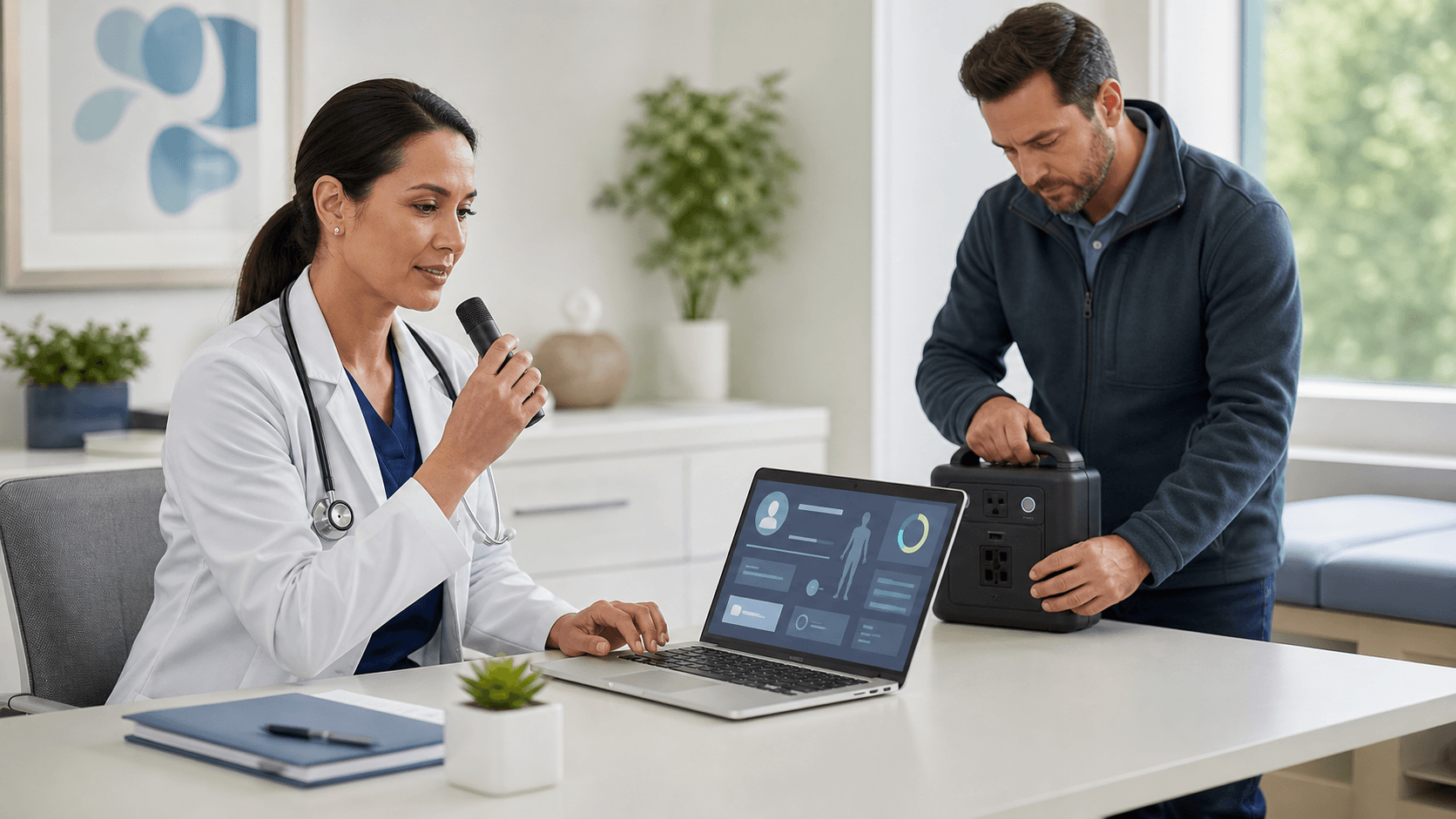
Reliable EHR Documentation Starts with Less Friction
Reliable EHR documentation is harder to achieve when clinicians are finishing notes between patients, catching up after clinic, or working around inconsistent processes. We see how small delays can add up when documentation tools do not match the way your team actually works. Medical speech recognition can create a more practical path from spoken clinical observations to the record, while clinicians remain responsible for reviewing and signing the final documentation.
Dragon Medical One is a medical speech recognition solution built for real-time dictation, specialty vocabularies, voice commands, AutoTexts, and roaming profiles across authorized workstations. At Try DMO, we support organizations with access and support for Dragon Medical One, but successful adoption takes more than switching on a new tool. Your team needs clear workflows, useful training, thoughtful testing, and a plan for ongoing support.
Assess Where Documentation Creates Delays
Before building a Dragon Medical One implementation plan, we recommend taking an honest look at where documentation feels slow, repetitive, or frustrating. Ask physicians, advanced practice providers, nurses, scribes, and administrative staff about the steps that interrupt their day. Their answers can show you where time is being lost and which workflows deserve attention first.
Start by mapping common documentation tasks from beginning to end. This does not need to become a complicated project. The goal is to understand when notes are created, how information moves into the EHR, and where people get stuck.
Review workflows such as:
- Progress notes and follow-up visits
- Procedure notes and referral letters
- Visit summaries and patient instructions
- Portal messages and other routine communication
- Notes that are completed after clinic hours
As you review these workflows, look for differences between specialties, locations, and provider roles. A cardiology team may use different terms and note structures than a primary care, behavioral health, orthopedic, or urgent care team. We encourage you to identify recurring phrases, specialty terms, and standard note elements that need to be captured clearly.
A baseline also gives your organization a practical way to measure progress later. Consider tracking note completion timing, after-hours documentation patterns, dictation use, editing needs, and clinician feedback. These measures can help you see whether the new workflow is becoming easier and more consistent over time.
Build a Practical Implementation Plan
Medical speech recognition works best when it is treated as part of the documentation process, not as a separate technical project. Your Dragon Medical One implementation plan should connect user access, workstation readiness, documentation standards, training, and internal support.
Bring together a small implementation group that represents the people affected by the change. We often recommend including clinical champions, IT staff, operations leaders, privacy or compliance stakeholders, and representatives from key specialties. Clinical champions can help keep the plan grounded in real patient-care workflows, while technical and operational teams can coordinate devices, user provisioning, and support expectations.
A phased rollout is often easier to manage than a practice-wide launch. Begin with a group of willing clinicians, then use their feedback to improve the process before expanding.
Your early planning should consider:
- Which users and locations will join the pilot
- Whether shared workstations or remote work affect access
- Microphone quality and workstation readiness
- Local support resources for early users
- Documentation tasks where dictation may be most helpful
Set clear expectations for how clinicians will use the tool and what they should do before signing a note. The purpose is not to make every provider document in the exact same way. Instead, we help practices create a consistent foundation while leaving room for appropriate specialty needs and personal preferences.
Standardize Workflows Without Limiting Clinicians
Consistency can make documentation feel more familiar from one shift to the next. Dragon Medical One can support repeatable workflows through voice commands, specialty vocabularies, and AutoTexts for common documentation language. Still, standardization needs to feel useful in the exam room, not like another layer of work.
Start with high-value AutoTexts and commands that match common tasks. Your team might identify frequently used normal findings, assessment language, patient education statements, or recurring note sections. Approved content should have an owner and a review process so it stays current and aligned with your internal documentation standards.
Specialty-specific guidance also matters. Rather than handing every department the same generic instructions, we recommend short guides based on real situations. A clinician may need simple direction for dictating a follow-up note, inserting an AutoText, moving between fields, or correcting recognized text before finalizing the record.
For clinicians who work in multiple locations, roaming profiles can help provide a familiar speech recognition experience across authorized workstations. Secure sign-in procedures, clean microphone practices, and ready-to-use workstations still matter. These details may seem small, but they can prevent the daily interruptions that cause people to abandon a new workflow.
Protect Documentation Quality with Review and Support
Speech recognition can help move spoken information into the documentation process, but it does not replace clinician review. We encourage practices to make that expectation clear from the beginning: each clinician must confirm accuracy, completeness, and proper placement in the EHR before signing.
Real-time review is especially important when documentation includes medication names, dosages, diagnoses, anatomical terms, or other details where a small wording error can change the intended meaning. Clinicians should be comfortable correcting text as they go, rather than treating dictation as a hands-off process.
Testing should happen within your existing EHR workflows before a broader rollout. Check how users move between fields, work with templates, insert AutoTexts, and review completed notes. A workflow that feels smooth for one provider role or workstation may need adjustment elsewhere.
Ongoing support should be simple to access. Users need a clear path for reporting recognition issues, requesting vocabulary updates, asking about voice commands, or getting help when their workflow changes. At Try DMO, we support healthcare organizations using Dragon Medical One so they can maintain access and get help with their medical speech recognition needs.
Train, Pilot, and Measure Adoption
A summer pilot can give your practice time to test and refine workflows before the busy fall season brings changing patient volumes, staffing shifts, and new operational demands. Training should be brief, hands-on, and tied to the documentation tasks clinicians perform every day.
Give pilot users time to practice dictating common note types, using commands, inserting AutoTexts, correcting text, and reviewing the final record. Regular feedback checkpoints can reveal where the workflow is working well and where users still feel slowed down.
As the pilot progresses, review both user feedback and your original measures. Update training materials, refine approved AutoTexts, address technical gaps, and identify more clinical champions before expanding. A thoughtful pilot turns early lessons into a clearer rollout plan.
Reliable documentation begins with a realistic understanding of your clinicians' daily work. When workflow assessment, specialty-aware setup, review standards, training, and responsive support work together, your team can build documentation habits that feel more consistent and less burdensome.
Build a Smoother Documentation Process
At Try DMO, we help clinical teams move forward with a Dragon Medical One implementation that reflects their documentation needs. Our team can help you plan the right setup, prepare users for adoption, and address questions as your team gets started. Contact us to discuss your goals and next steps.