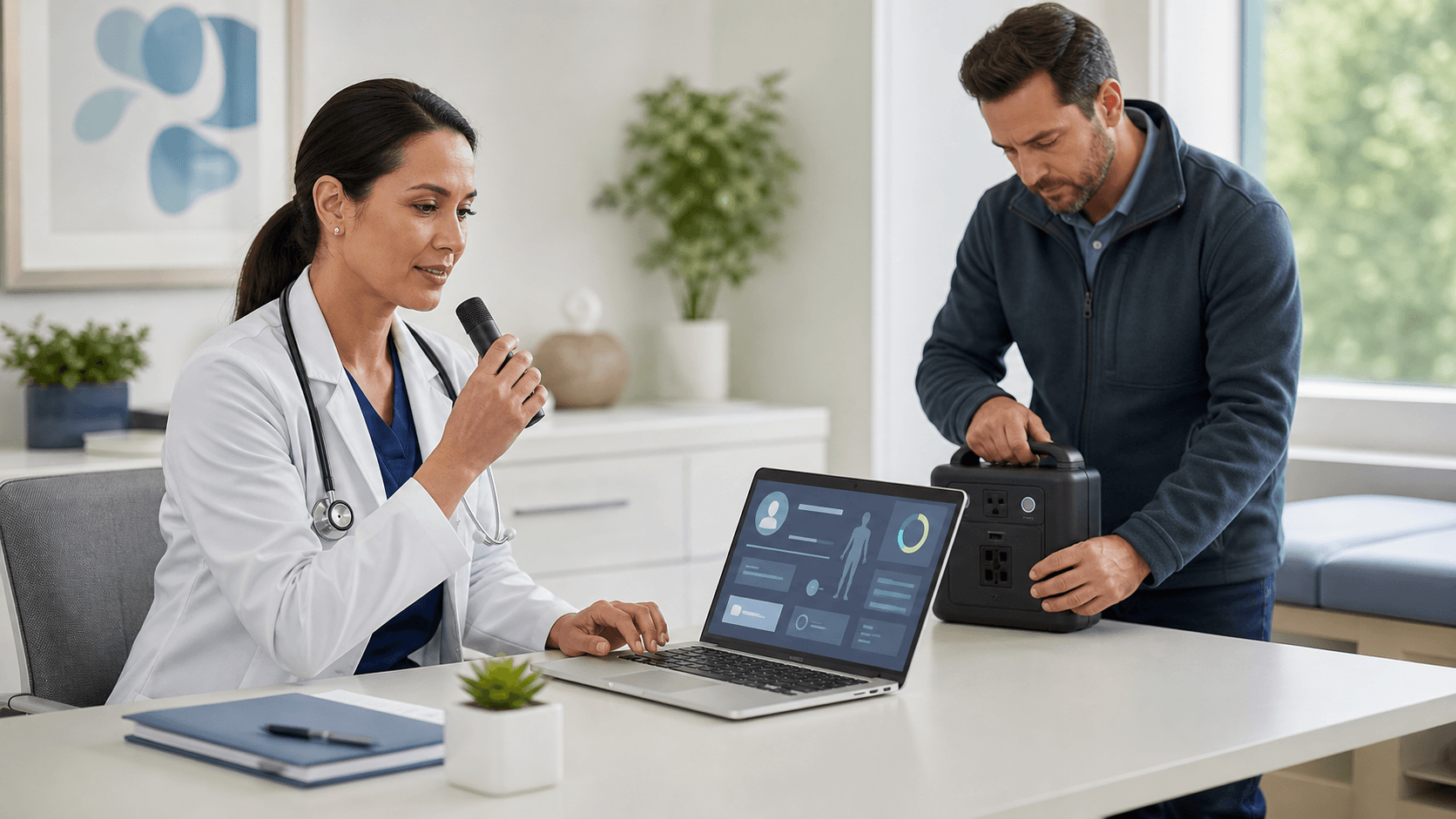
Summer is supposed to feel a little lighter, but many practices hit late summer buried in unfinished charts and delayed billing. Clinicians are still stuck at their desks at night, waiting for slow logins and glitchy microphones on old speech servers. Cloud medical dictation is one of the fastest ways to clear that backlog and give people their evenings back.
This guide walks through a simple, real-world blueprint for moving from on-prem dictation to cloud. We will look at security, network checks, pilot design, user training, downtime planning, and a basic ROI model, so you can replace legacy systems without chaos when the visit volume spikes later in the year.
Why Practices Are Leaving Legacy Dictation Servers
Old on-prem dictation can feel like a weight around the clinic's neck. At first it did the job, but over time the cracks show.
Common pain points with legacy speech servers include:
- Constant hardware refreshes and surprise failures
- Local IT hours spent on patches and odd errors
- VPN headaches for remote and cross-site providers
- Lag that breaks a provider's train of thought
On top of the friction, aging systems grow risky. Patches may be delayed. Operating systems slip out of support. Backups are not always tested. Physical servers can sit in closets with unclear access rules. All of that can make leaders nervous about HIPAA alignment and business continuity.
Cloud medical dictation flips that picture. Software stays current. Performance can flex when flu season hits. Providers can move between locations, or document from home, with far less hassle. Governance is simpler for growing groups that cover multiple clinics or regions.
Security and Compliance Checklist for Cloud Dictation
Security is usually the first big question. With cloud dictation, there is a shared responsibility model. The vendor handles the platform. The practice still owns how people access it.
Expect a qualified cloud medical dictation partner to provide:
- A Business Associate Agreement
- Encryption for data in transit and at rest
- Audited, professionally managed data centers
Your side of the fence includes:
- Strong access controls and identity management
- Clear policies for device use and remote work
- Regular staff training on PHI handling
There are a few must-have controls to look for in any solution:
- Role-based access and user groups
- Single sign-on and multi-factor authentication
- Detailed audit logs and reporting
- Options for data residency, when needed
- Secure configuration defaults for clients and add-ins
A simple due diligence flow can help keep everyone aligned. Start with a structured security questionnaire. Review any SOC 2 or similar reports, then send the BAA to legal for review. After that, run a tabletop exercise: if a clinician loses a laptop, how would you respond, from login revocation to patient communication, using a product like Dragon Medical One as your working example.
Network Readiness and Downtime Resilience
Cloud dictation lives or dies on network quality. The good news is, the actual bandwidth needs per user are usually modest. The bigger concern is latency and stability.
Here is a basic approach:
- Measure current bandwidth and latency at each site
- Test from satellite offices and typical home setups
- Check for Wi-Fi dead spots in exam areas and offices
We want resilience, not perfection. For key clinics, a pair of internet connections can keep people working if one line drops. Simple Quality of Service rules that prioritize voice traffic can smooth things out during busy hours. On endpoints, stable OS versions, clean audio drivers, and tested microphones help reduce random glitches that users often blame on the cloud.
Then there is the question everyone asks: what if it goes down? Build a downtime and failover playbook before go-live. It should cover:
- Local or basic dictation fallback, where appropriate
- How to use short note templates or smart phrases during an outage
- Who alerts staff, and in what order, when something breaks
- Steps for confirming the system is stable again and clearing any backlog
When practices go through this once on paper, actual incidents tend to feel calmer and shorter.
Pilot Design and User Training That Drive Adoption
A thoughtful pilot is the difference between a smooth rollout and months of grumbling. The pilot group should mirror real life, not just tech fans.
Aim for a mix like:
- Different specialties, from primary care to high-documentation subspecialties
- Physicians, APPs, and maybe a few scribes or HIM staff
- At least a couple of skeptics, not only early adopters
Give the pilot a clear start and end date. Before it begins, agree on success metrics, such as:
- Average time per note
- Chart closure time after the visit
- User satisfaction and comfort
During the pilot, keep feedback loops tight. A partner like Try DMO can help review results, tweak vocabularies, and adjust settings based on the way your team actually documents. Quick changes show users that their opinions matter.
Training should be short, focused, and tailored. Good options include:
- Role-based classes for providers, HIM, and IT
- Quick-reference cards at workstations
- In-EHR tip sheets with commands and sample phrases
- At-the-elbow support during the first weeks of go-live
When someone closes a full clinic day on time for the first time in months, word spreads fast. That is how adoption grows without heavy pressure from leadership.
Building a Practical ROI and Sustainability Model
Cloud medical dictation often starts as a burnout fix, but it should also make sense on paper. The best way to do that is to tie workflow changes to time.
Start with a simple question: how many minutes does a typical provider save per chart when dictation is fast and accurate, and clicks are reduced? Multiply that by the number of notes per day, then by working days. Even small daily savings become meaningful hours each month, and across a year the number gets big.
Those reclaimed hours can then support:
- More same-day or follow-up visits
- Fewer late-night charting sessions
- More focused review time for complex cases
Financial impact also shows up in documentation quality. Clearer, more detailed notes can support coding and reduce back-and-forth on denials. At the same time, moving away from legacy hardware lowers capital and local maintenance work. IT time can shift from firefighting old servers to guiding better workflows.
To keep things honest, build three scenarios: best, base, and worst. Set up a simple dashboard that tracks provider usage, performance, and support tickets. Plan an annual review to spot new training needs, changes in visit patterns, or EHR updates that might unlock more value over time.
Launch Your Cloud Dictation Migration Before Peak Season
Late summer is a smart window to get this done. The weather is warm, schedules are shifting, and there is usually just enough breathing room to make changes before respiratory season ramps up.
Start by mapping your current dictation workflows and any contracts still in place. Pick the use cases that hurt the most right now, like high-volume clinics or providers with heavy after-hours charting. Then plan a discovery session with a cloud dictation partner such as Try DMO, and name internal champions who can carry the change forward with your clinical and IT teams.
With a clear blueprint for security, network readiness, pilots, training, downtime, and ROI, replacing legacy speech servers becomes less of a gamble and more of a steady, managed project. That is how cloud medical dictation turns from one more tech decision into a real lift for your clinicians and your organization.
Streamline Clinical Documentation With Faster, More Accurate Voice Workflows
If you are ready to reduce charting time and focus more on patient care, Try DMO can help you upgrade to truly efficient cloud medical dictation. Our team will guide you through setup, personalization, and best practices so you can see value from day one. Start simplifying your documentation today and give your clinicians a smoother, more reliable way to capture every detail in the record.